


International freight forwarding for South Korea
by air and sea
South Korea is one of East Asia’s original “Tiger Economies”, which developed rapidly during the 1980s. Its mature industrial economy remains an important part of international supply chains, creating opportunities for German businesses involved in imports and exports with South Korea.
Flexible transport arrangements for imports and exports
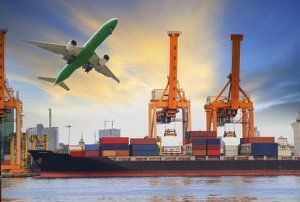 Sea, Air, Transport & Service works through its worldwide partner network at important South Korean locations, including Seoul and Incheon with its major international airport, and Busan, a major city and the country’s principal container-port gateway. Busan is an important international container transshipment hub. Together, the northern and southern locations support onward connections across South Korea.
Working with our local partners, we develop flexible arrangements based on your requirements and the appropriate balance of cost and service. This applies to imports, exports and international removals to and from South Korea. Collection and delivery can be coordinated for destinations across the country, subject to the shipment and location. This forms part of our door-to-door service. We support the transport itself and the associated import/export handling and customs process, drawing on the local partners’ knowledge of the relevant procedures.
Experience and coordinated support: Sea, Air, Transport & Service
 Choose Sea, Air, Transport & Service for your import, export or international removal by air or sea to or from South Korea. We will explain the available options and how they fit your requirements. Contact us using the enquiry form, by telephone or by email. Once you provide the shipment details, our team can answer your questions and prepare an individual quotation.
South Korea’s economy: historical context

- the earlier overview cited GDP of around US$1.5 trillion and placed South Korea among the world’s 15 largest economies; this is historical context rather than a current ranking;
- the foreign-trade ratio was reported at 82.4% of GDP in 2013. Exports were around US$560 billion and imports approximately US$516 billion;
- electronics, vehicles and chemical products accounted for major export shares, while oil and gas were important import categories in that overview;
- major suppliers were identified as China, Japan, the United States and Saudi Arabia, with China, the United States, Japan and Hong Kong as major customers;
- Germany exported goods worth €14.5 billion to South Korea in 2013 and imported goods worth €8 billion. These historical figures should not be interpreted as a current measure of Germany’s or the EU’s relative trading importance.
Selected airports and seaports in South Korea
| Airport / seaport | IATA code / UN/LOCODE | City |
| Incheon International Airport | ICN | Incheon / Seoul |
| Busan International Airport | PUS | Busan (Pusan) |
| Port of Incheon | KR INC | Incheon |
| Port of Busan | KR PUS | Busan (Pusan) |
01. Need a quotation?
Benefit from our experience with transport to and from South Korea.
Our local partner network supports an individual plan for your cargo, route and delivery requirements.
02. What do you need?
Germany–South Korea trade lane: ports, airports and transit planning
South Korea is an important East Asian trading partner for Germany, with cargo flows including electronics, automotive components, machinery and chemicals. The main gateway for sea freight is Busan. Direct and transshipment services connect it with Hamburg and Bremerhaven. The existing overview gives an indicative FCL sea transit of 5–6 weeks, depending on the schedule, transshipment and season. Actual sailings and operating conditions must be confirmed. Smaller shipments can be consolidated in an LCL groupage container (German)while full-container shipments use the appropriate container size (German). We can assess other gateways, including Incheon or Gwangyang, when required. For urgent goods, air freight through Incheon International (ICN) and Frankfurt (FRA) provides another option. The existing overview quotes roughly 13–14 hours of flying time; collection, airline capacity, handling, customs and delivery determine the actual end-to-end schedule.
Customs and origin: the EU–South Korea Free Trade Agreement
The EU–Republic of Korea Free Trade Agreement can provide reduced or zero duties for eligible originating goods. Its proof-of-origin system uses neither an EUR.1 movement certificate nor an ordinary certificate of origin (German)as the preferential proof. Instead, the agreement provides for an origin declaration on the invoice or another qualifying commercial document. Any exporter may make the declaration for consignments containing originating products with a total value not exceeding €6,000. Above that threshold, an approved exporter must make the declaration and state the required authorisation number. An exporter making an origin declaration must retain its copy and supporting records for at least five years under the agreement; importer record-keeping follows the importing party’s national law, and longer applicable retention periods must also be observed. Economic operators importing into Germany generally require an EORI number (German). We coordinate the relevant customs clearance (German) and assist with the correct tariff classification (German).
Frequently asked questions
How long does sea transport from South Korea to Germany take?
For Busan to Hamburg or Bremerhaven, the existing overview gives an indicative 5–6 weeks of sea transit. Collection, delivery and customs handling are additional, and current carrier schedules must be confirmed. An initial, non-binding estimate is available through our sea freight cost calculator (German).
What origin proof is needed for goods from South Korea?
The agreement uses the prescribed origin declaration on an invoice or another suitable commercial document. Above €6,000 of originating products in a consignment, it must be made by an approved exporter. A valid claim also depends on the goods satisfying the origin rules; missing or invalid evidence can mean that the normal tariff applies. We can explain South Korea’s status as a non-EU country (German) and the relevant import procedure.
Is import VAT still payable?
In general, import VAT can still be due even when a customs-duty preference is claimed. An eligible business may recover input tax subject to the applicable conditions. A duty preference changes the customs tariff; it does not automatically create an import-VAT exemption.
Telephone: +49 (0)89 1250 30 790