


Freight forwarding for USA imports and exports, including vehicle shipping by air and sea
The United States is a major market for international trade and an important destination and origin for German imports and exports. Alongside China, it is one of Germany’s key trading partners outside the EU.
Sea, Air, Transport & Service has operated in the United States for many years. Our partner network is particularly well developed here, in part because importing vehicles from the USA has long been one of our specialities.
Your specialist for US imports, exports and relocations
 Our support extends beyond US vehicle imports. We also arrange other imports and exports, including air freight to and from the United States. We can also develop solutions for relocations to or from the USA for companies, their employees and private individuals. Our established network gives us access to many US locations and allows us to plan shipments flexibly. On the East Coast our network includes the major ports of
- Boston,
- New York,
- Newark,
- Charleston
- Miami
and on the Pacific Coast it includes
- Seattle,
- San Francisco,
- Los Angeles
- San Diego, as well as
- Honolulu
Our inland network also covers important logistics centres such as
- Atlanta,
- Chicago,
- Houston,
- Laredo,
- Minneapolis
- Reno
.
This reach allows us to plan complex transport requirements with a focus on reliability, flexibility and suitable transit times. We combine sea freight, air freight and inland transport to find the right balance of cost and service for your shipment. You benefit from our many years of practical experience in US logistics.
Importing a car from the USA: vehicle imports from A to Z
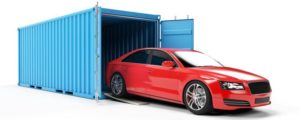 The US automotive market (German) offers interesting opportunities for buyers in Germany. Our services extend beyond transport and shipment handling: we can support the purchase process, from the agreement in the USA through the steps towards vehicle registration (German)in Germany.
Through our network, we can organise collection of customer vehicles across the USA and transport to a suitable departure port. Our main export gateways include Newark, New Jersey; Miami, Florida; Houston, Texas; and Los Angeles and San Francisco on the West Coast. We prepare freight quotations and coordinate the services required for the particular vehicle and route.
For further information, visit our page on importing cars from the USA.
Sea, Air, Transport & Service: here to help
 We will be pleased to advise you on our services for US exports, imports and relocations. We have also put together practical relocation information here: Moving to or from the USA (German)
To discuss your plans, simply use our contact form, email us or give us a call. We will review your requirements and explain the next steps. If your shipment details are already available, we can prepare a tailored quotation.
The following sections bring together information about imports and exports involving the USA. Economic figures from the original country profile are retained as historical context and are identified by their reference period; they are not current market rankings.
- Economic facts
- Major airports and ports
- US gross domestic product
- Per-capita income
- Trade balance
- Main countries of origin for US imports
- Main destinations for US exports
- Goods exported from the USA to Germany
- Goods imported by the USA from Germany
- Customs duties
- Import taxes
- Import requirements
Economic data for United States

- Nominal gross domestic product in 2025 approximately US$ 30,769.7 billion.
- GDP per capita in 2025 approximately US$ 90,027.
- Population in 2025 approximately 341.8 million.
Data year 2025. GDP figures are in current US dollars. Source World Bank, retrieved on 8 November 2026. GDP, GDP per capita, population.
Selected airports and ports
| Airport / seaport | IATA code / UN/LOCODE | City |
| Charlotte Douglas International Airport | CLT | Charlotte, North Carolina |
| Chicago O’Hare International Airport | ORD | Chicago, Illinois |
| Harry Reid International Airport (formerly McCarran) | LAS | Las Vegas, Nevada |
| Los Angeles International Airport | LAX | Los Angeles, California |
| Miami International Airport | MIA | Miami, Florida |
| Minneapolis-Saint Paul International Airport | MSP | Minneapolis, Minnesota |
| Newark Liberty International Airport | EWR | Newark, New Jersey |
| John F. Kennedy International Airport | JFK | New York City, New York |
| San Francisco International Airport | SFO | San Francisco, California |
| Washington Dulles International Airport | IAD | Washington, D.C. area / Dulles, Virginia |
| Hartsfield–Jackson Atlanta International Airport | ATL | Atlanta, Georgia |
| George Bush Intercontinental Airport | IAH | Houston, Texas |
| Logan International Airport | BOS | Boston, Massachusetts |
| Philadelphia International Airport | PHL | Philadelphia, Pennsylvania |
| Dallas/Fort Worth International Airport | DFW | Dallas, Texas |
| Phoenix Sky Harbor International Airport | PHX | Phoenix, Arizona |
| Detroit Metropolitan Wayne County Airport | DTW | Detroit, Michigan |
| Port of Anchorage | US ANC | Anchorage, Alaska |
| Port of Baltimore | US BAL | Baltimore, Maryland |
| Port of Charleston | US CHS | Charleston, South Carolina |
| Port of Chicago | US CHI | Chicago, Illinois |
| Port of Detroit | US DET | Detroit, Michigan |
| Port of Galveston | US GLS | Galveston, Texas |
| Port of Houston | US HOU | Houston, Texas |
| Port of Jacksonville | US JAX | Jacksonville, Florida |
| Port of Long Beach | US LGB | Long Beach, California |
| Port of Los Angeles | US LAX | Los Angeles, California |
| Port of Miami | US MIA | Miami, Florida |
| Port of New York | US NYC | New York/New Jersey |
| Port of Norfolk | US ORF | Norfolk, Virginia |
| Port of Philadelphia | US PHL | Philadelphia, Pennsylvania |
| Port of San Diego | US SAN | San Diego, California |
| Port of San Francisco | US SFO | San Francisco, California |
| Port of Savannah | US SAV | Savannah, Georgia |
01. The right partner for your shipment!
Benefit from our experience with shipments to and from the USA. Our established US network and individually assessed freight options make SATS a capable partner for your transport project.
02. What do you need?
Gross domestic product and the private sector
GDP measures the annual value of goods and services produced, after deducting intermediate inputs. The dated World Bank figures in the economic overview identify the data basis used for this country profile.
For US cargo movements, the actual production, storage and receiving locations matter. Long inland distances, selected gateways and pre-carriage or onward delivery are included in planning.
GDP per capita and income data
GDP per capita is average annual economic output per resident. Income and purchasing power are measured using other indicators. Comparisons need consistent data years, currencies and methods.
A freight enquiry primarily requires accurate cargo details, goods value and collection and delivery locations. These details support the individual quotation.
Trade balance and bilateral goods trade
A trade balance depends on the goods or services covered and the reporting period. For goods trade with Germany, the US Census Bureau records 2025 US exports of approximately US$82.8 billion and US imports of approximately US$155.8 billion. Values are nominal and not seasonally adjusted. The official table identifies both trade directions and the data year.
For your shipment, we establish origin, destination, delivery terms and the agreed services for the relevant direction.
Countries of origin for US imports
Imports into the USA require the origin and dispatch location, importer of record and appropriate product documents to be established. Goods from different origins can be subject to different tariff and trade measures.
Provide an accurate goods description, value and details of the parties involved. Classification and the rules applying on the entry date are checked in the relevant customs process.
Destinations for US exports
US exports require documentation and transport planning suited to the goods, buyer and destination country. Shipments to Germany require coordinated preparation of the US export and EU import procedures.
Machinery, vehicle parts, aerospace products and pharmaceutical goods can have different packaging, product and authorisation requirements. Each enquiry is assessed using its specific cargo details.
US exports to Germany by product category
Vehicles, vehicle parts, machinery and technical equipment are relevant to shipments from the USA to Germany. The following product groups require precise descriptions and cargo-specific preparation.
- Motor vehicles and vehicle parts
- Pharmaceutical products
- Gas turbines and machinery components
- Aerospace products
- Medical instruments
Transport availability depends on the goods, required documents, capacity and applicable export and import requirements.
US imports from Germany by product category
Vehicle manufacturing, machinery, chemicals, pharmaceuticals and medical technology are relevant to transport planning for German supplies to the USA. The actual product determines packaging, load securing and accompanying documents.
- Vehicles and vehicle parts, including commercial vehicles and suitable marine or aerospace components
- Machinery, turbines, engines, gearboxes, valves and pumps
- Chemical and pharmaceutical products
- Medical instruments, X-ray equipment and measuring devices
US duties and additional trade measures are checked against the product, origin and entry date. The quotation must reflect the applicable measures.
Borders and geography
The United States occupies a large part of North America. Its northern land border with Canada is approximately 8,895 kilometres long, including about 2,477 kilometres along Alaska.
Its southern land border with Mexico extends for approximately 1,954 miles (3,145 kilometres). The original profile’s discussion of a proposed border wall related to the political debate at that time and is not a description of the current construction programme.
The USA also has Atlantic and Pacific coastlines. Hawaii lies roughly 6,600 kilometres from Japan, while Alaska and Russia are separated by a much shorter distance across the Bering Strait. The Little Diomede area illustrates this proximity and the familiar observation: You can see Russia from Alaska!
Economic complexity and transport requirements
Complex industrial goods often combine mechanical, electrical and electronic components. Accurate technical information, suitable packaging and any special handling requirements are therefore important for transport.
A complete goods description and the required product documents support early coordination of transport and customs handling. Requirements are checked for each shipment.
Customs requirements when importing from the USA into Germany
Customs duties on US goods entering the EU
Goods imported from the USA are subject to EU customs rules, administered in Germany by the German customs authority. Depending on the goods and transaction, these include import prohibitions, restrictions, duties and taxes.
Product rules also apply, including health, safety and environmental requirements imposed by EU or German authorities. Relevant requirements can apply to private as well as business imports. Classification, origin, customs value and intended use must be established before the shipment is booked.
- Do not assume that consignments worth up to €150 are automatically exempt from customs duty. From 1 July 2026, the former low-value duty relief was removed. A temporary €3 duty per item category applies to qualifying low-value IOSS or postal imports under the specific EU rules; it is not a universal €3 charge for every freight shipment. The appropriate customs procedure and applicable tariff must be checked, and import VAT may also be due.
- For other consignments, including goods valued above €150, the applicable duty depends on tariff classification, origin and the measures in force; some tariff lines may have a zero rate. Classification is checked against TARIC, the EU customs tariff.
- Storage, inspection, handling or other service charges may arise in addition to customs duties and taxes. Their application depends on the shipment and service arrangement.
Goods requiring a customs declaration must be declared under the appropriate procedure. Germany uses the electronic ATLAS system for customs processing.
For a vehicle purchased in the USA and shipped to Germany, the purchase documents, transport costs, vehicle classification, origin and customs value must be assessed before import. The applicable duty must be checked in the current EU tariff, including any relevant EU-US measures; old blanket rates for cars, pickups or motorcycles are not a reliable quotation. German import VAT is generally 19%, assessed on the statutory tax base rather than the purchase price alone. Customs or handling charges may also apply.
Before road registration, the vehicle must meet the applicable German approval requirements. Depending on the vehicle, technical inspection and modifications may be necessary, for example to lighting, speedometer displays or tyres. The necessary work must be assessed individually; not every US vehicle can be registered without further conditions.
Import VAT and excise duties
Imports from non-EU countries such as the USA are generally subject to import VAT. In Germany, customs administers this tax alongside any applicable customs duty. The standard rate is 19%; a reduced rate of 7% applies to qualifying goods under the statutory rules. The tax base can include customs value, customs duty and certain incidental costs, rather than the goods price alone.
The former €22 import-VAT exemption ended on 1 July 2021 and must not be used when planning a shipment. Particular procedures, exemptions or reliefs may apply only where their conditions are met.
Alcohol, tobacco and energy products may additionally be subject to excise duties.
Import requirements when exporting to the USA
The United States is a member of the World Trade Organization and the World Customs Organization. The TTIP negotiations ended without an agreement at the end of 2016. On 15 April 2019, the Council of the EU declared the negotiating directives obsolete. The European Commission documents the TTIP timeline. More recent EU-US trade arrangements and the current US tariff measures must be checked for the specific product, origin and entry date.
Imports are supervised by U.S. Customs and Border Protection, or CBP, together with other competent agencies. Customs cooperation includes supply-chain security and inspection programmes involving overseas ports.
US import requirements are governed by customs and trade legislation and implementing regulations. Security requirements introduced after the attacks of September 2001 remain an important part of shipment planning, alongside current product-specific and trade-control rules.
- Informal entry is generally available for qualifying merchandise valued at no more than US$2,500, subject to the goods, exclusions and CBP requirements. The value alone does not guarantee eligibility, and simplified entry does not remove product, duty or tax obligations.
- Formal entry generally requires entry or release information and an entry summary for duty assessment and statistical reporting. Electronic filings are made through the Automated Commercial Environment, or ACE, under the applicable procedure and deadlines.
Responsibility for the import declaration and compliance rests with the importer of record. Eligible foreign companies can act as non-resident importers, subject to CBP registration, identification, agent and bond requirements. A licensed US customs broker can prepare and file entries where authorised; the precise arrangement must be established for the shipment rather than assuming that every foreign importer follows the same procedure.
- Some tariff lines, including certain machinery, may carry a zero ordinary customs-duty rate. This does not guarantee duty-free entry: classification, origin and any additional tariff measures or trade remedies must be checked in the current US tariff.
- The applicable US duty is determined using the current Harmonized Tariff Schedule of the United States, together with relevant additional measures and exemptions. The merchandise processing fee for applicable formal entries is generally 0.3464%, subject to annually adjusted minimum and maximum amounts and any exemption. The harbour maintenance fee is generally 0.125% on applicable commercial vessel cargo at covered ports, subject to its own rules. These fees should not be applied indiscriminately to every shipment.
- Excise taxes may apply to particular goods, including alcohol, tobacco and certain energy products.
- Certain goods require an import permit or other authorisation; firearms are one example. The competent agency and the product rules must be checked in advance.
- Import prohibitions or restrictions can apply to particular products, origins, parties or end uses. Current sanctions and other trade controls must be assessed before acceptance.
Requirements of other US agencies can apply in addition to customs rules. These may cover safety, energy efficiency, health and environmental protection. For food, FDA requirements can include facility registration and prior notice where applicable; this is not a blanket FDA approval of every food shipment. Vehicle imports can be subject separately to EPA emissions rules and Department of Transportation/NHTSA safety requirements. OSHA requirements may be relevant to workplace equipment and its use; the applicable product and workplace rules must be identified individually.
Further information on US customs procedures is available here in English.
Sources used in the original historical country profile
https://de.statista.com/statistik/daten/studie/14418/umfrage/bruttoinlandsprodukt-in-den-usa/
https://www.laenderdaten.info/durchschnittseinkommen.php
https://de.statista.com/statistik/daten/studie/15635/umfrage/handelsbilanz-der-usa/
https://www.census.gov/foreign-trade/statistics/highlights/top/top1312yr.html
https://www.census.gov/foreign-trade/balance/c4280.html
http://atlas.media.mit.edu/en/profile/country/usa/
http://atlas.media.mit.edu/en/visualize/tree_map/hs92/export/deu/usa/show/2015/
http://atlas.media.mit.edu/en/visualize/tree_map/hs92/import/deu/usa/show/2015/
http://atlas.media.mit.edu/de/rankings/country/eci/
http://www.exportmanager-online.de/2014/ausgabe-9-2014/herausforderung-import-in-die-usa/
https://www.mehrwertsteuerrechner.de/einfuhrumsatzsteuer-eust/#Einfuhrumsatzsteuer_USA
Freight forwarding between Germany and the USA: routes, gateways and customs
The USA is an important trading partner for Germany. As an international freight forwarder, we organise shipments in both directions, using air freight for time-sensitive goods and sea freight for suitable high-volume or heavy cargo. European pre-carriage and onward delivery can be arranged by road transport (German), with coordinated customs clearance (German) at origin and destination through the relevant authorised parties.
- Air freight: from Frankfurt (FRA) and Munich (MUC) to gateways such as New York (JFK), Chicago (ORD), Atlanta (ATL) and Los Angeles (LAX). The original planning guide indicates approximately one to three days airport to airport for suitable services; actual schedules, capacity, handling and customs must be confirmed for each booking.
- Sea freight: from Hamburg and Bremerhaven to East Coast ports such as New York/New Jersey, Savannah and Charleston; to Houston on the Gulf; and to Los Angeles/Long Beach on the West Coast. The historical guide’s approximately ten to fourteen days to the East Coast is indicative sea transit only. Current service schedules and any routing changes must be checked, with additional time allowed for inland transport, terminals and clearance.
- Automotive: Vehicle imports from the USA and Canada are a particular area of our experience, from collection and shipping to coordination of EU import clearance. The services and technical requirements depend on the vehicle and destination.
Importing into the USA: what to prepare
For relevant vessel shipments entering the USA, CBP requires an Importer Security Filing (ISF, or “10+2”). Eight of the importer data elements are generally due no later than 24 hours before loading at the foreign port; the remaining data elements and shipment types have their own rules and deadlines. ISF is an ocean-cargo requirement, not a general air-freight filing. HTSUS classification, entry preparation and any required customs bond must also be addressed. For imports into Germany, economic operators generally need an EORI number (German), and applicable customs duty and import VAT must be assessed. As the USA is a non-EU country (German), customs and product documentation must be checked. A certificate of origin (German) may be required for a particular product, procedure or commercial purpose; it is not automatically mandatory for every import simply because the origin is outside the EU.
Frequently asked questions about USA imports and exports
How long does transport to the USA take?
The original planning guide gives approximately one to three days airport to airport for suitable air services and around ten to fourteen days of sea transit to the East Coast, with longer voyages to the West Coast. These are indicative references, not guaranteed current delivery times. The actual route, sailing or flight, capacity, inland transport, terminal handling and customs clearance determine the booking schedule.
What is the Importer Security Filing (ISF)?
ISF, also known as “10+2”, is a CBP security filing for relevant vessel cargo. Eight importer data elements are generally due at least 24 hours before loading at the foreign port; different deadlines or procedures can apply to other elements and shipment types. Missing or late information can lead to delays or penalties. We coordinate the filing requirements with you and the authorised filing party.
Can I import a vehicle from the USA?
We organise suitable vehicle imports from the USA and Canada by sea or air, including collection and coordination of EU import handling. Acceptance, customs treatment and registration requirements must be checked for the individual vehicle. Send us the vehicle details so that we can assess the route and required services.
Telephone: +49 (0)89 1250 30 790