


Freight forwarding for imports & exports involving India
by air and sea freight
India overtook China as the world’s most populous country in 2023. The subcontinent is a vast market with long-term potential. The world’s largest democracy has developed into an emerging economy with strong growth prospects.
This creates opportunities for exports and imports involving India.
Sea, Air, Transport & Service supports your business with India. With our international transport expertise, we can arrange exports and imports to and from the subcontinent. We are also here to help with relocations to or from India. For India, sea freight is a principal transport option. Naturally, we can also advise you on air freight, which may be more suitable when speed or a particular delivery deadline is the priority.
Full service for Indian imports, exports and relocations
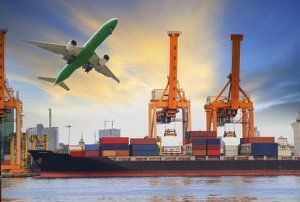 Our long-standing partners give us a local presence at the country’s main ports. The key port cities of Kolkata, Chennai, Mumbai and Tuticorin provide logistics bases from which to serve destinations throughout the country.
Through our partner network, we also have a presence in the inland metropolitan areas of New Delhi, Hyderabad and Bangalore, important transport hubs for northern, central and southern India.
This network allows us to offer more than port-to-port or airport-to-airport transport. We also manage complex logistics requirements and serve destinations outside the major centres. Our full service includes complete handling and customs clearance, a valuable advantage when dealing with India’s administrative requirements. Our local partners understand the relevant regulations. We aim to combine high quality with fair prices. Discover the value of our expertise.
Get in touch
 We are here to answer your questions and advise you, or prepare a specific quotation if you already know what you need for your planned export, import or relocation to or from India. Contact us easily through our contact form, by email or by phone. We will respond to your enquiry promptly.
India’s economy: historical figures from 2013–2014

- India’s gross domestic product was approximately US$1.8 trillion in 2014, placing the country tenth in the international comparison used by the historical profile;
- the historical profile reported GDP per capita of approximately US$1,450 and a position in the lower third of the international ranking. It also highlighted marked income disparities alongside substantial growth potential;
- India recorded a foreign-trade deficit in 2013, with exports of US$337 billion compared with imports of US$466 billion;
- the historical profile described the EU and particularly Germany as accounting for a relatively small share of India’s foreign trade. German imports from India reached €6.9 billion in 2013 and exports to India €9.2 billion, illustrating scope for further trade development.
Major airports and seaports in India:
| Airport / seaport | IATA code / UN/LOCODE | City served |
| Mumbai Airport – Chhatrapati Shivaji Airport | BOM | Mumbai (Bombay) |
| Delhi Airport – Indira Gandhi Airport | DEL | New Delhi (Delhi) |
| Kempegowda International Airport | BLR | Bangalore |
| Netaji Subhash Chandra Bose International Airport | CCU | Kolkata (Calcutta) |
| Chennai International Airport | MAA | Chennai (Madras) |
| Port of Mumbai | IN BOM | Mumbai (Bombay) |
| Port of Kolkata | IN CCU | Kolkata (Calcutta) |
| Port of Chennai | IN MAA | Chennai (Madras) |
01. The right partner!
Benefit from our experience in transport to and from India.
Our extensive network in India and competitive terms make us a strong partner.
02. What do you need?
Germany–India trade route: seaports, air-cargo gateways and transit times
Maritime trade between India and Germany mainly uses the west-coast ports of Nhava Sheva (JNPT, Mumbai) and Mundra (Gujarat) and Chennai on the east coast. Regular direct services operate from Nhava Sheva to Hamburg, with comparatively short transit times of around 33 to 36 days, while shipments from Mundra and, in particular, Chennai often pass through the transshipment hubs of Colombo or Singapore. Depending on the shipping line, service rotation and transshipment arrangements, allow a realistic sea transit time of approximately four to six weeks port to port. For full container loads (FCL) (German) and consolidated less-than-container loads (LCL) (German), we plan the service rotation around your delivery deadline. You can check current indicative conditions in advance using our sea freight price calculator (German). We transport time-critical consignments by air freight from Delhi (DEL), Mumbai (BOM), Bengaluru (BLR) and Chennai (MAA) to Frankfurt (FRA) or Munich (MUC), typically taking three to five days.
Customs for India: third-country status and the EU–India trade agreement
For EU customs purposes, India is a third country (German). The EU and India concluded negotiations for a free trade agreement on 27 January 2026. A negotiated agreement is not itself a basis for claiming preferential tariffs. Ratification, the relevant institutional approvals and the applicable customs provisions determine when the agreement can be used. Until the relevant provisions apply, there is no automatic bilateral FTA preference for Indian goods. Preferences under this agreement depend on the agreement taking effect and on the applicable rules of origin; the rules must be checked for each shipment. Any separate GSP eligibility, product graduation and origin requirements must be assessed independently. For the customs declaration, you need a valid EORI number (German), the correct commodity code (HS code) (German) and, depending on the goods, an Indian Certificate of Origin (German). Imports may be subject to the applicable customs duty and German import VAT (normally 19% at the standard rate). We handle the complete customs clearance (German) process for you.
Frequently asked questions
How long does sea transport from India to Germany take?
Direct services from Nhava Sheva (Mumbai) to Hamburg are the fastest option, taking around 33 to 36 days. Shipments from Mundra and Chennai generally involve transshipment in Colombo or Singapore. Overall, a realistic port-to-port transit time is approximately four to six weeks, depending on the shipping line and service rotation.
Can I already benefit from the EU–India free trade agreement?
The conclusion of negotiations does not by itself create an entitlement to preferential tariffs. Eligibility depends on the agreement’s applicable implementation provisions and rules of origin. We check the status relevant to your shipment before calculating any preferential-duty saving.
Which documents do I need to import from India?
You need a commercial invoice, packing list, transport document (bill of lading or air waybill), EORI number and the correct commodity code. Depending on the goods, a certificate of origin and import licences may also be required. We check your documentation before loading.
Phone: +49 (0)89 1250 30 790